
Categories
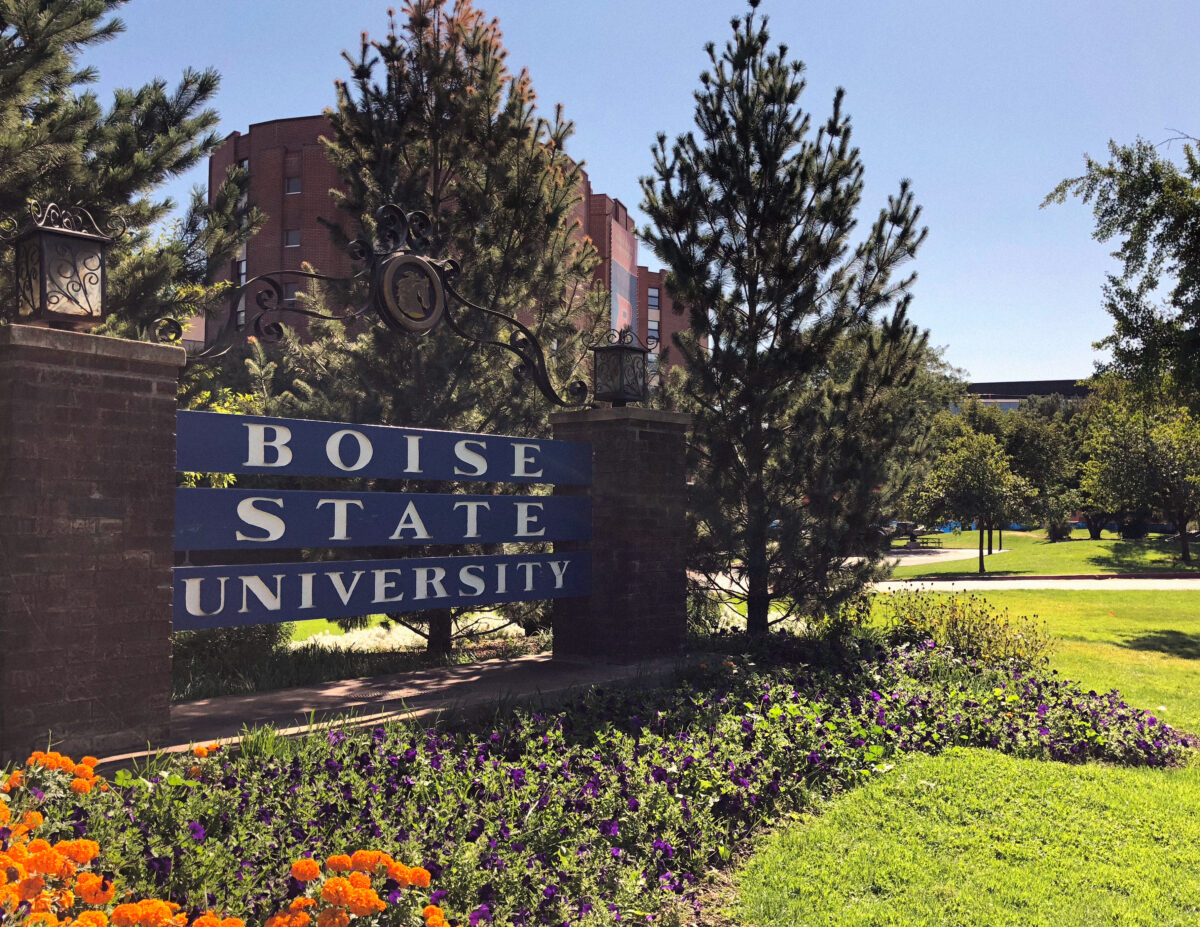
Hotel and Travel Information
Nestled in the Treasure Valley, Boise offers beautiful views and access to nature within an urban context. According to Visit Boise, “Boise is both urban and wild. It’s grit and glamour. Our lively, clean, artistic, vibrant, tree-lined city is just steps from mountains, a river and hundreds of trails.”
The city offers a delightful blend of outdoor recreational opportunities, arts and culture spaces, and good food, all easily accessible from the Boise State campus and downtown region. Below are a few popular areas:
- Camel’s Back Park offers an easy entry into the Ridge to Rivers Trail, with accessible hiking and trail running paths
- Public art is featured throughout the city, including public murals and the Freak Alley Gallery, a constantly changing public art display situated downtown
- Boise offers a wide range of food options to suit any food preference, many of which are available downtown and easily walkable from hotels and campus. Garden City (an easy bike ride from downtown) is home to several wineries. Boise also offers wide range of breweries (and a cider house!), many of which are also downtown. And stellar local coffee shops are easily accessible throughout the downtown region.
- For wildlife lovers, the Boise Zoo (located right across the river from campus) and World Center for Birds of Prey are popular destinations. The World Center for Birds of Prey hosts Fall Flights September-October (purchase tickets ahead of time to attend!).
Hotels
We have room blocks at two local hotels, both less than a mile (.6 mi) from the conference location on Boise State’s campus:
- TownePlace Suites by Marriott Boise Downtown/University ($149/night; book by September 11)
- Residence Inn Marriott Downtown/University ($169/night; book by September 15)
To ensure block pricing, book your room by September 7.
Other hotels and lodging options are also available within close proximity to campus (these are just a sampling):
- Hampton Inn Downtown (1 mile from Liberal Arts Building)
- Residence Inn Downtown/City Center (1 mile)
- Courtyard Marriott (1.4 mile from Liberal Arts Building)
- The Modern (1.7 mile from Liberal Arts Building)
Transportation
Easily accessible transportation options will allow visitors to get from the airport to hotels, and from hotels to Boise State’s campus. In addition to vehicle transportation options, Boise also offers bike rentals and is also safely bikeable/walkable with designated bike lanes, wide sidewalks, and the Greenbelt to facilitate non-car based transportation.
Airports
The Boise Airport is served by nine airlines with 27 nonstop locations, making it a fairly easy flight from most locations. The airport is also a short drive from the downtown area and approximately 4 miles from the Boise State campus.
Buses
Valley Regional Transit runs buses from the airport to campus and through different areas in the region.
In addition, Boise State provides a free Bronco Shuttle service, which also runs through the downtown area. These shuttles are ADA accessible.
The Bronco Shuttle is a free service Boise State University Department of Public Safety provides, carrying students, faculty, and guests around campus. The shuttle operates on a regular weekday schedule, ensuring everyone can get where they are going promptly. The Blue and Orange lines operate from 7 a.m. to 9 p.m. and the Green line operates from 8 a.m. to 5 p.m. during the fall and spring semesters when class is in session.
Rental Car
Rental cars are available at the airport from major providers, including Avis/Budget, Alamo, Dollar Car Rental, Enterprise Rent-A-Car, Hertz, National, and Thrifty.
Ground Transportation
Ground transportation is widely available. Uber and Lyft, as well as local taxi services, are available, in addition to the Valley Regional Transit busses and the Boise State Bronco Shuttles. Some hotels provide complementary shuttle service to and from the airport.
Parking
On campus parking is available in two different parking decks (Lincoln Garage and Brady Garage). These garages are both a short walk away from the Liberal Arts Building and parking passes will be available for attendees.
Things To Do
Interested in birds and conservation? Visit the World’s Center for Birds of Prey and purchase a ticket for Fall Flights! The Center is open daily 10am-5pm; Fall Flights take place on Fridays, Saturdays, and Sundays in October (show is at 11am; doors open at 10am–recommended arrival before 10:30am). Book your tickets ahead of time!
Do you like to hike, mountain bike, and/or trail run? You can easily access popular hiking trails in the Boise foothills. The Ridge to Rivers website lists trails and an interactive map to plan your trek! Some recommended routes include
- Starting at Camel’s Back Park, easy access to a range of trails of various distances and the Foothills Learning Center
- Table Rock is a popular local hiking destination!
Jenn can point to other hiking recommendations, depending on what you’re after, so feel free to ask!
In nearby Julia Davis Park, you’ll find the Boise Art Museum, Idaho State Historical Museum, Idaho Black History Museum, Zoo Boise, and the Discovery Center, along with lots of natural space to enjoy–all easily accessible from Boise State’s campus.
On a bike or on foot (or via rental scooter), you can take the Greenbelt along the Boise River and head all the way out to Lucky Peak State Park or to various other attractions! You can also make your way to Garden City, where you can access the Beverage Corridor or other attractions, like watching surfers ride river waves or enjoying wineries and restaurants with a river view.
History Buffs. Visit Old Idaho State Penitentiary, one of only four territorial prisons still open to the public today. Explore the historic cellblocks and hear stories of escapes, scandals, and Boise’s transformation from the Wild West into a modern capital city.
Boise Music Scene. Dig through the stacks at The Record Exchange. A Boise institution since 1977, packed with new and used vinyl, CDs, music, gifts, and plenty of local personality. Even if you don’t buy a record, it’s worth wandering through.
Catch a show at Treefort Music Hall, one of the hubs of Boise’s thriving music scene and home base for the annual Treefort Music Fest. Catch touring artists, discover a new favorite band, or just experience a little of the indie energy that has put Boise on the music map. Visit Hap Hap on the roof for snacks or a beverage for Treefort vibes. There are many ways to search for live shows in Boise and here’s one of them.
Wander through Freak Alley Gallery, the largest open-air mural gallery in the Northwest, where an ever-changing collection of colorful street art fills an entire downtown Boise alleyway.
Visit the Blue Turf, named USA Today’s Best Attraction for Sports Fans in 2025. Pay homage to Idaho’s timber roots with axe throwing, or wander through JUMP (Jack’s Urban Meeting Place), a playful downtown gathering space filled with giant slides, public art, vintage tractors, gardens, and rooftop views. While you’re there, learn about Idaho’s potato baron, J.R. Simplot, whose innovations in frozen potato processing helped put Idaho fries on the map.
Food recommendations
Downtown Boise offers a lot of dining options. Here are some good ones!
- Boise is known for the Basque Block, which also has a lot of delightful Basque restaurants including Bar Gernika (Featured on DIners, Driveins, and Dives) and the Basque Market! You should also check out Ansot’s (James Beard nominee) nearby for Basque tapas.
- James Beard enthusiasts should check out KIN, Avery, Kibrom’s Ethiopian & Eritrean Food, Janjou Pâtisserie
- The Warehouse Food Hall offers a range of dining options. Next door, you’ll also find The STIL, which is an excellent ice cream shop (with dairy free/vegan options!)
- Boise’s 8th Street is home to a vast variety of dining options, accessible by foot from campus (or via the Bronco Shuttle!). Some favorites include
- Terroir another James Beard Nominee (excellent gluten-free and vegetarian options)
- BitterCreek Alehouse a Boise original to the craft beer and alehouse scene.
- When in Idaho, eat a potato! Or get yourself a variety of fried potatoes at the Boise Fry Company. Or order the Ice Cream Potato at Westside Drive In. It’s ice cream disguised as a baked potato. Also order the Finger Steaks, with Fry Sauce, Two Idaho Classics.
- Lemon Tree Co. offers delicious sandwiches (great options for gluten free, vegetarian, and vegan)
- Moon’s Kitchen offers an excellent breakfast option (including good gluten-free pancakes!)
Looking for something specific? Just ask!
Coffee
We have many, many coffee shops to try, and here are a few that are awesome
- Roast @ Dawson Taylor (a nice walk from campus and near to the hotels)
- Slow by Slow Coffee Bar
- Form and Function
- Flying M Coffee
- District Coffeehouse
- Broadcast Coffee
- Neckar
Boise After Dark
Looking for a place to have a cocktail, conversation, or a view.
- See Boise from a rooftop. Highlander
- Speakeasy fun. Thick as Thieves, Gatsby
- Bar, Please! James Beard, Best New Bar in Nation Semi Finalist
- 8 Horses Lounge, a cocktail lounge inside a former bank vault with a 15 ton vault door
- Oldspeak in Garden City offers both libations and books and is, to quote a friend, the “platonic ideal of a bar”
Categories
2026 CPTSC Conference CFP
Dear Colleagues:
On behalf of the conference planning committee and Boise State University, we look forward to welcoming you to Boise, Idaho for the annual meeting of the Council for Programs in Technical and Scientific Communication (CPTSC) on October 9-10, 2026.
IMPORTANT DATES AND INFO
PROPOSAL DEADLINE EXTENDED
Proposals are due Monday, May 4, 2026.
PROPOSAL SUBMISSION PROCESS
- All proposals should be submitted via the proposal website. The link is provided below:
- Accepted proposals will be included in the conference proceedings.
- Please use APA style for references and in-text citations.
CALL FOR PROPOSALS
2026 CPTSC Annual Meeting
Founded in 1974, the Council for Programs in Technical and Scientific Communication (CPTSC) supports faculty, administrators, and researchers of technical, professional, and scientific communication.
Our mission is to advance the study and teaching of technical, professional, and scientific communication across the globe.
The 2026 CPTSC Conference invites you to consider any of following areas or related areas of focus:
Empowering Academic Communities for the Evolution of Professional Communication
- Determining the core competencies and skills necessary for the next generation of communicators and establishing methods for faculty and students to integrate these high-level proficiencies into their professional practice.
Advancing Curricula Through Emerging Digital Frameworks
- Exploring the ways communication programs can adapt to modern digital ecosystems, specifically by integrating agentic AI workflows alongside advanced data visualization and immersive media to ensure graduates are prepared for technology-driven environments.
Fostering Collaboration Among Science, Engineering, and Communication Experts
- Investigating the collaborative dynamics between technical experts and communication specialists, with an emphasis on creating cohesive knowledge-sharing practices that bridge the gap between complex research and stakeholder application.
Prioritizing Human- and User- Centered Experiences in Technical Information Design
- Evaluating the impact of user-centered information architecture and accessibility-first design, focusing on how intuitive content structures improve the quality of human interaction with complex systems.
Advancing Ethics, Social Justice, and Public Advocacy
- Developing communication strategies for a globalized world that challenge systemic inequalities and prioritize proactive public engagement, emphasizing civic responsibility to provide transparent, accessible, and community-focused information.
PROPOSAL FORMATS
Proposals are invited for the following types of presentations at the conference:
- Individual Presentations
- Panel Presentations
- Workshops
Individuals may present in only ONE individual or panel presentation.
Workshop hosts may present in one additional panel presentation.
INDIVIDUAL PRESENTATIONS
Individual presentations are 5–7 minutes per individual presenter and should be designed to promote discussion during the second half of the session. Submit a proposal of no more than 250 words (not including references) of the proposed presentation.
PANEL PRESENTATIONS
Panel presentations are 50 minutes and should include contributions from 3–5 individuals. Panels should be designed to promote discussion during the second half of the session. Submit a two-part proposal of no more than a total of 500 words (not including references. The proposal should consist of:
1. A 150-200-word overview framing the focus of the panel in the context of the conference theme.
2. A 300–350-word summary of the topics each presenter will address within the context of the panel.
WORKSHOPS
Workshops are 75 minutes. Workshops should be interactive and focus on a professional development need related to TCP programs and curriculum.
- A proposal of no more than 800 words (not including citations) should consist of:
- A 200-300-word overview framing the focus of the workshop that includes a description of the audience for the workshop (new or potential technical communication program administrators, experienced administrators, early-career and graduate students, mid-career administrators, faculty, etc.).
- A 300–500-word summary of the topic and activities the workshop will address.
PROPOSAL REVIEW CRITERIA
- Demonstrates a strong connection between the proposed presentation and the organization’s mission.
- Presents an original or innovative approach, perspective, theory, or idea that would be of interest to CPTSC members.
- Raises interesting issues or questions to stimulate discussion or notes what attendees can “take away” from the presentation to use within the context of their own organizations or programs.
- Please include all references using APA style. References (bibliography) do not count toward word limit (in-text citations do count toward word limit).